


The complete guide
Measuring up for an over-the-toilet unit
The one measurement that matters
Over-the-toilet units get returned for a single reason: the buyer measured the room and not the cistern.
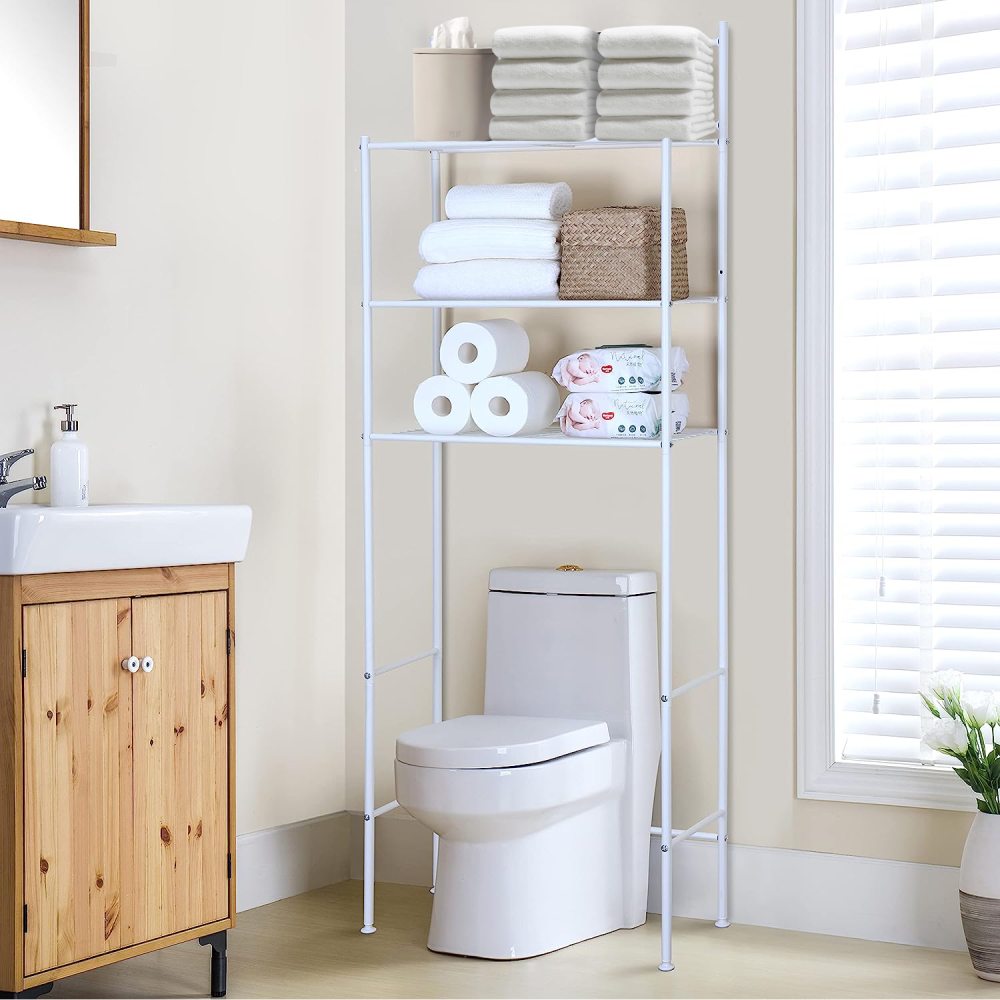
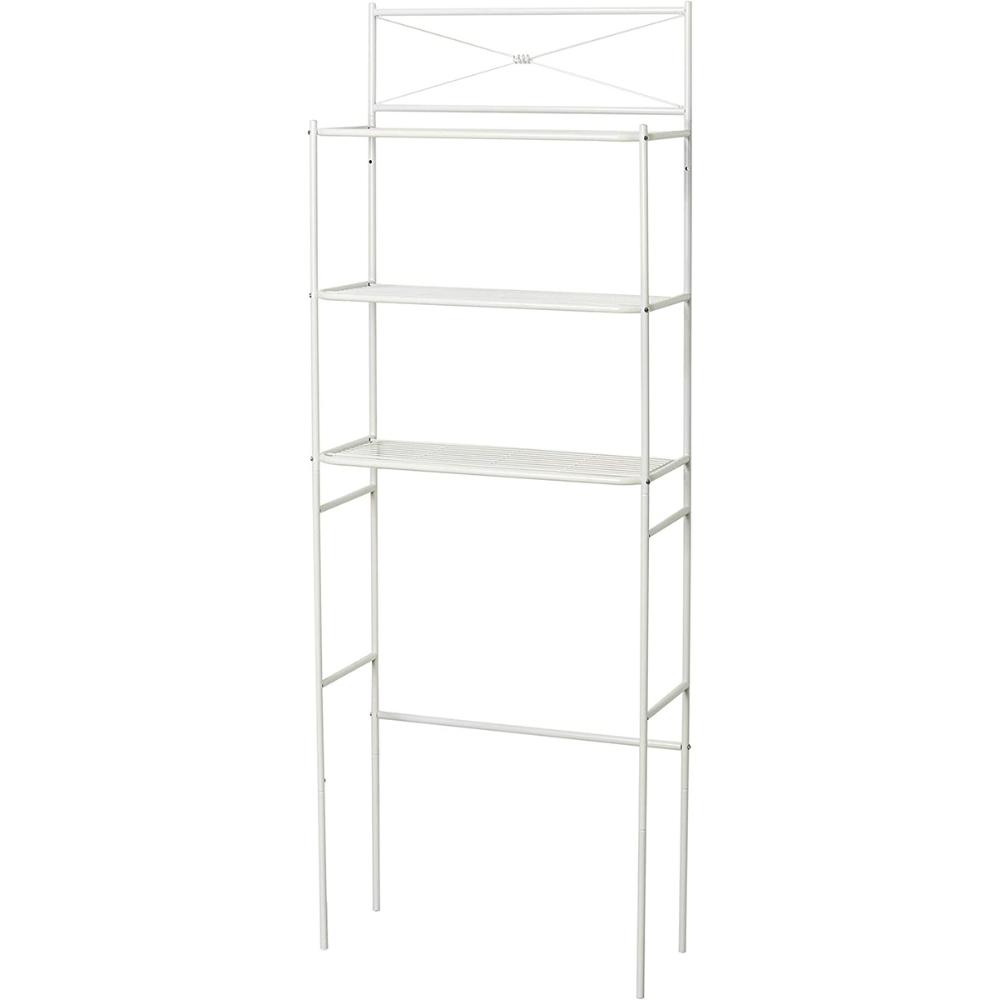
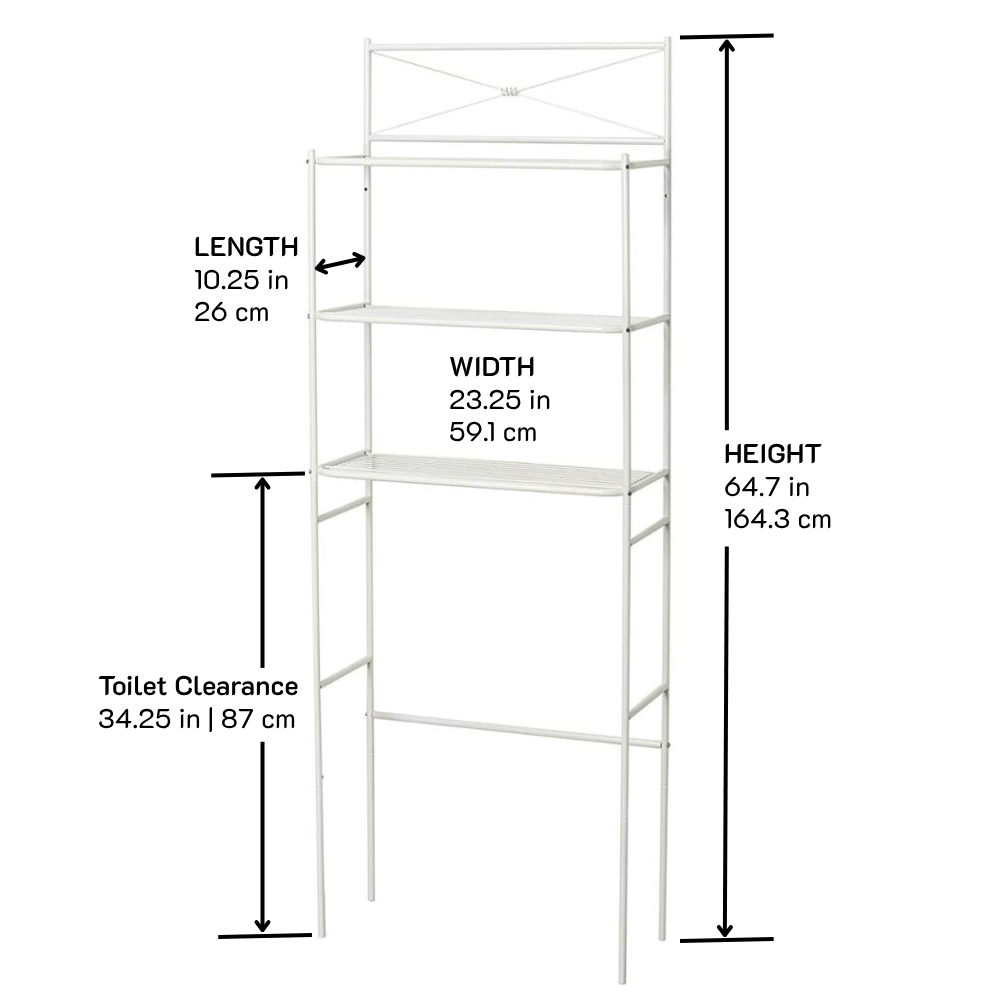
The number to take is floor to the top of your cistern. On this unit the bottom shelf sits 87 cm from the floor, so anything below that clears. Standard close-coupled cisterns are usually in the mid seventies, taller traditional ones can reach the mid eighties, and if yours is above 87 cm the unit will not sit down properly no matter how much room there is either side.
Then check the width. The frame spans 59.1 cm, so the legs need floor either side of the toilet within that span, clear of a pedestal, a pipe boxing or a skirting board.
Depth is the one people forget. At 26 cm it projects about as far as a towel rail, which matters in a narrow bathroom where the door swings past it.
Freestanding, but fix the top anyway
This unit stands on the floor. The anti-tip hardware in the box is not carrying the shelves, it is stopping the whole thing coming forward if someone pulls on it.
It is worth being blunt about why that matters. The unit is 164 cm tall on a 26 cm footprint. That is a tall, narrow object at head height in a room with a hard floor, and children pull on things at exactly the height of the bottom shelf. One screw into the wall takes five minutes.
If you are renting and cannot drill, the honest answer is that this is not the right unit for you, rather than that it is fine without the bracket.
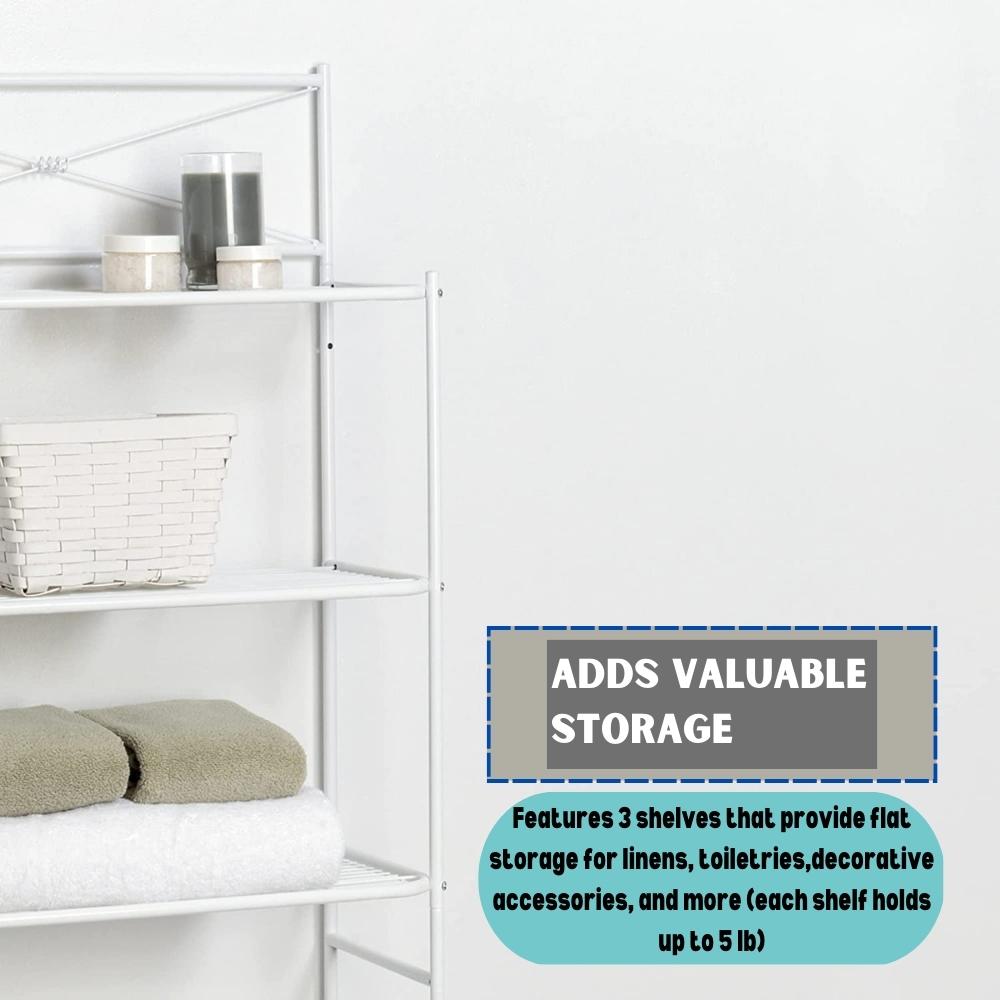
What three shelves at 2.3 kg actually holds
Shelf ratings sound small until you weigh what you were going to put there.
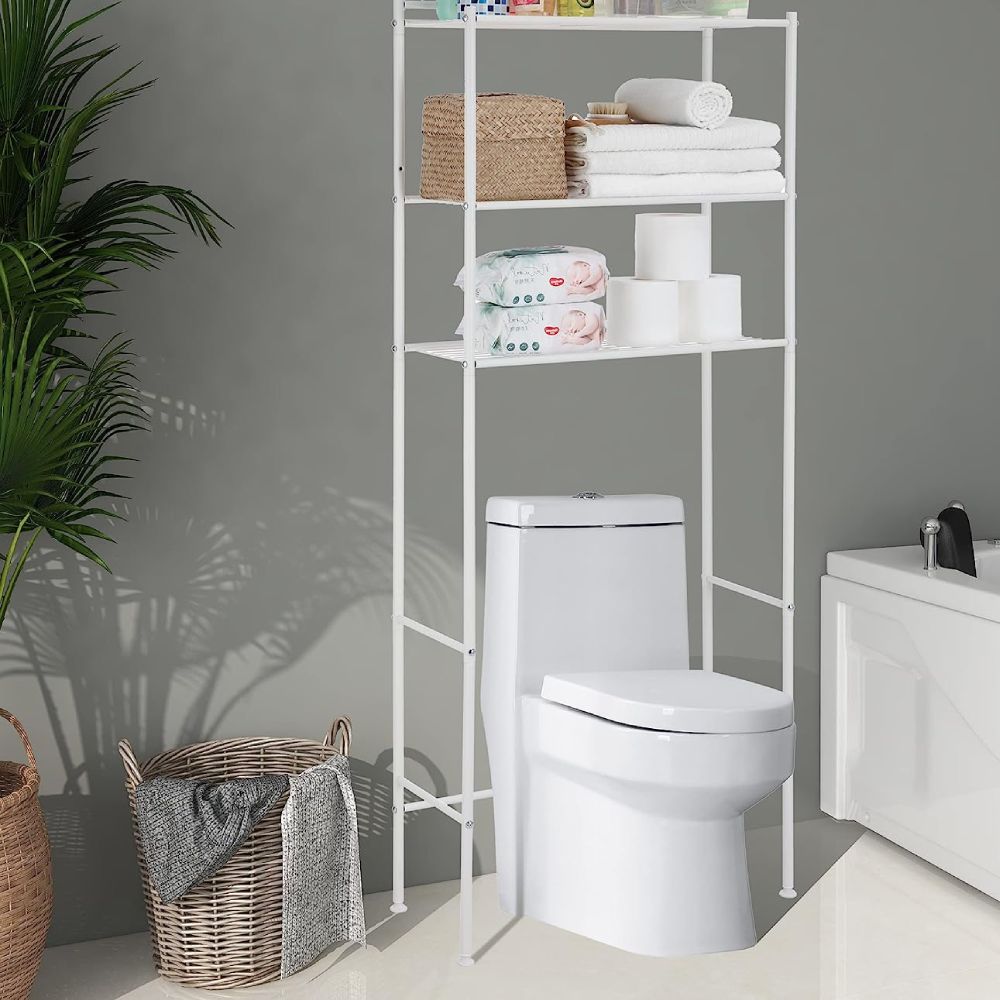
A folded bath towel is around 700 g, so two or three per shelf is comfortable. Bottles are heavier than they look: a full litre of shower gel is a kilo on its own. Toilet rolls weigh almost nothing and take the space instead.
The shelves are open and flat, which is good for towels and poor for anything that rolls. A shallow basket on the top shelf turns it from a place things fall off into usable storage, and it hides the clutter you did not want on show anyway.
Living with steel in a damp room
The finish is rust resistant, which is not the same as saying damp is irrelevant.
What shortens the life of any finished steel in a bathroom is water sitting on a horizontal surface, usually under something. A wet bottle left in the same spot, or a damp towel folded on the shelf every day, keeps one patch permanently wet.
Wiping the shelves down now and then, and drying anything that has sat wet, is the whole of the maintenance. Abrasive cleaners are the thing to avoid, because scratching the finish is what gives moisture a way to the steel underneath.